 English
 العربية
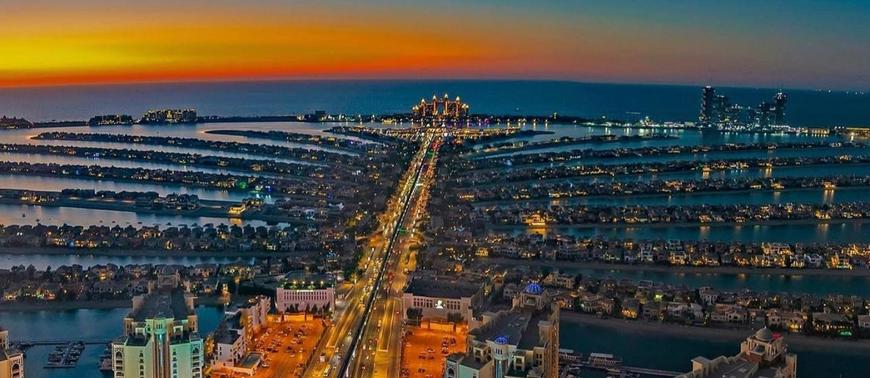
Palm Jumeirah is one of the world’s largest man-made islands and Dubai’s unmistakable palm-shaped marvel. Built from sand and rock in the Arabian Gulf, it blends audacious engineering with luxury living, record-breaking hotels and unforgettable views. Below, discover amazing facts about Palm Jumeirah—covering general highlights, history, construction secrets, fun trivia and lesser-known insights.
How much do you really know about Dubai’s famous palm-shaped island? Even after two decades of global attention, many details still surprise first-time visitors and long-time fans alike. This guide rounds up the most astonishing Palm Jumeirah facts—backed by context, easy comparisons and bite-sized stats—to help you see this landmark in a whole new light.
Often described as a modern wonder, Palm Jumeirah is celebrated for its five-star hotels, upscale residences and waterfront promenades—but the story behind its design and creation is equally captivating. Let’s dive in.
GENERAL PALM JUMEIRAH FACTS
- The overall development cost for Palm Jumeirah has been widely reported at around $12 billion (excluding the cost of private buildings and resorts), reflecting a project scale few cities have attempted.
- Before reclamation began, expert marine divers and survey teams studied seabed conditions and rock formations to assess feasibility and environmental impact, helping to refine the island’s precise footprint.
- Palm Jumeirah is synonymous with luxury—home to ultra-premium hotels, fine dining, beach clubs and high-end residences—making it one of the most prestigious addresses in Dubai.
- With sweeping Gulf panoramas, the island is designed for elevated coastal living: long promenades, private beaches and skyline views combine to create a resort-like residential feel.
- It regularly ranks among Dubai’s priciest residential zones, with trophy villas and penthouses setting new benchmarks for waterfront real estate.
- The palm layout includes a 2 km-long trunk, a crescent-shaped breakwater and 16 fronds, maximizing sea views and private beachfront for residents and hotels.
PALM JUMEIRAH HISTORY FACTS
Conceived to boost tourism, diversify the coastline and expand freehold property options, Palm Jumeirah is a flagship project by Nakheel. The master plan’s iconic geometry is credited to the architectural firm HHCP, whose experience with large entertainment destinations helped shape the island’s people-first design.
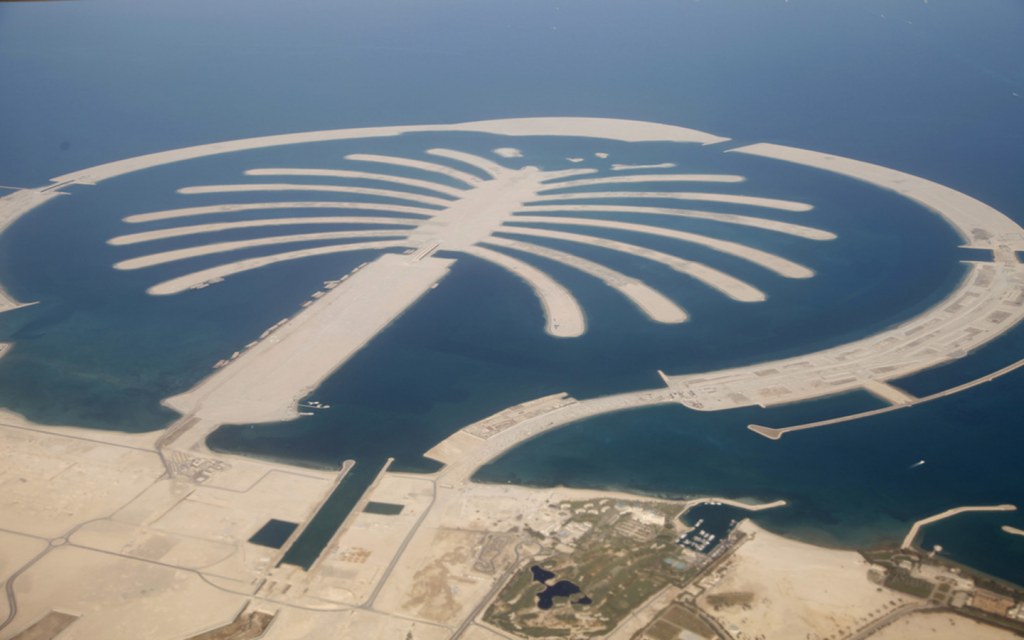
- Groundwork began in 2001; major land reclamation milestones were achieved by the mid-2000s, paving the way for roads, utilities and shoreline stabilization.
- Core infrastructure reached key completion by 2004, and the island opened for vertical construction in 2006.
- By 2007, the first residents had moved in, with a significant share of villas and apartments handed over to owners as the community came to life.
- Hospitality surged soon after: within a few years, dozens of hotels and resorts opened, anchoring Palm Jumeirah’s global reputation for luxury travel.
- Over 100 technical studies examined everything from coastal modeling and wave dynamics to civil engineering, transport planning and marina design.
- More than 12,000 palm trees were cultivated in dedicated nurseries to enhance the island’s landscape identity and shade its public realms.
PALM JUMEIRAH CONSTRUCTION FACTS
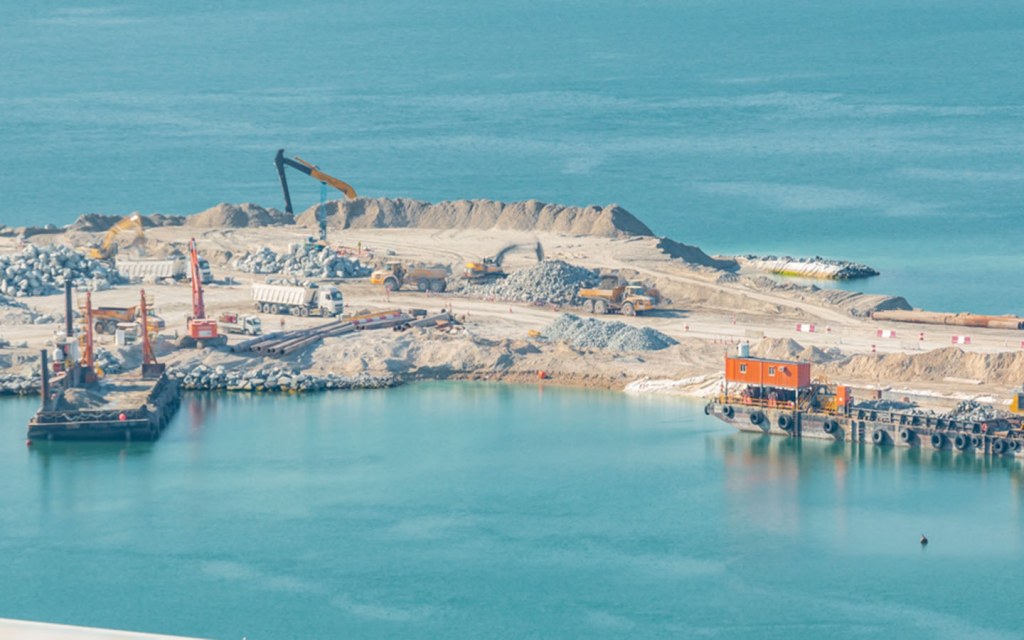
Palm Jumeirah was built using land reclamation—moving and placing vast volumes of sand and rock with high-precision positioning to form the palm shape and protective crescent.
- The island’s base is made from compacted sand protected by rock; while buildings and bridges use concrete and steel, the marine foundation relies on natural materials for stability.
- Engineers placed about 120 million cubic metres of sand and roughly 7 million tonnes of rock, much of it sourced from the Hajar Mountains, to form the trunk, fronds and breakwater.
- Sand was dredged from carefully selected borrow areas in the Arabian Gulf and transported to site—some locations were up to around 10 nautical miles away—then placed and shaped to millimetre-accurate contours.
- High-precision (differential) GPS and continuous hydrographic surveying guided the exact palm outline, ensuring accuracy at a scale visible from space.
- Vibro-compaction densified the reclaimed sand, increasing bearing capacity and reducing long-term settlement so buildings, roads and utilities could stand securely.
- The crescent-shaped breakwater is a multi-layered shield made from geotextile, sand and rock armoring. It protects Palm Jumeirah from waves and storm surges while allowing water circulation through strategically designed openings.
PALM JUMEIRAH FUN FACTS
Curious about the island’s size, record numbers and celebrity ties? These intriguing facts about Palm Jumeirah will surprise you.
- Area-wise, Palm Jumeirah spans approximately 5.72 sq km—roughly the size of 600 football pitches—making its scale easy to grasp in everyday terms.
- While commonly called an “island,” Palm Jumeirah is connected to mainland Dubai by a 1.4 km bridge (and via an underwater vehicular tunnel), forming an artificial archipelago linked by modern infrastructure.
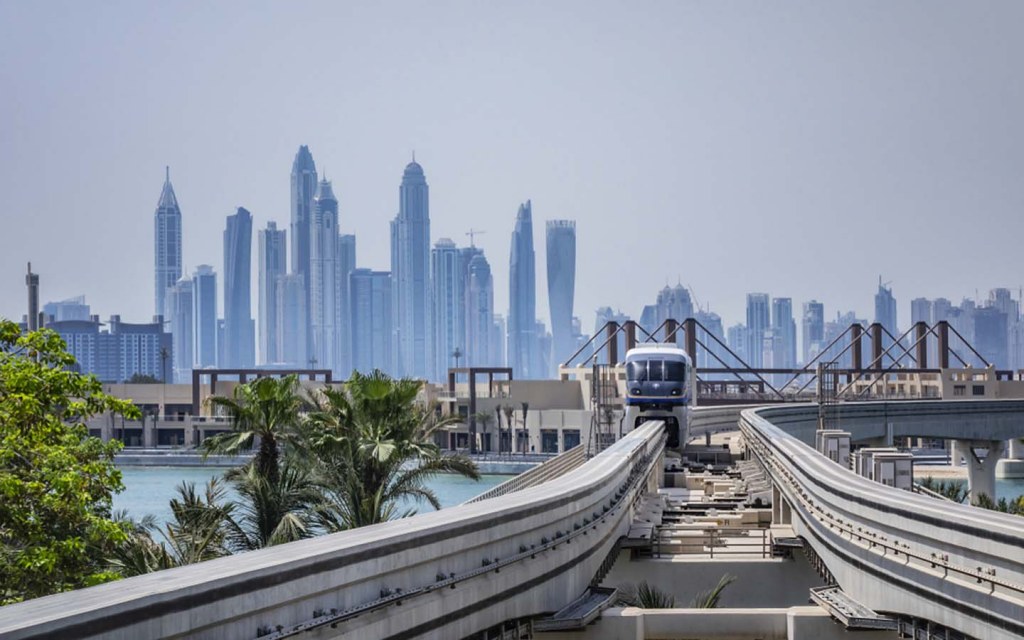
- The Palm Monorail runs along the trunk out to the crescent, offering aerial views of the fronds and skyline. The system was designed for high daily ridership and now connects with key attractions and transport hubs along its 5+ km route.
- Engineers estimate the materials used—if repurposed—could form a 2-metre-high sea wall that circles the Earth multiple times. It’s a striking way to picture the immense volume of sand and rock employed.
- Global icons have reportedly owned or stayed in Palm Jumeirah properties, including football legend David Beckham and Bollywood superstar Shah Rukh Khan. The island is also a favorite staycation spot for A-listers from film, music and sport.
- Record-breaking deals are part of the island’s story, with ultra-prime plots and signature villas fetching headline-making prices and signaling robust demand for waterfront luxury.
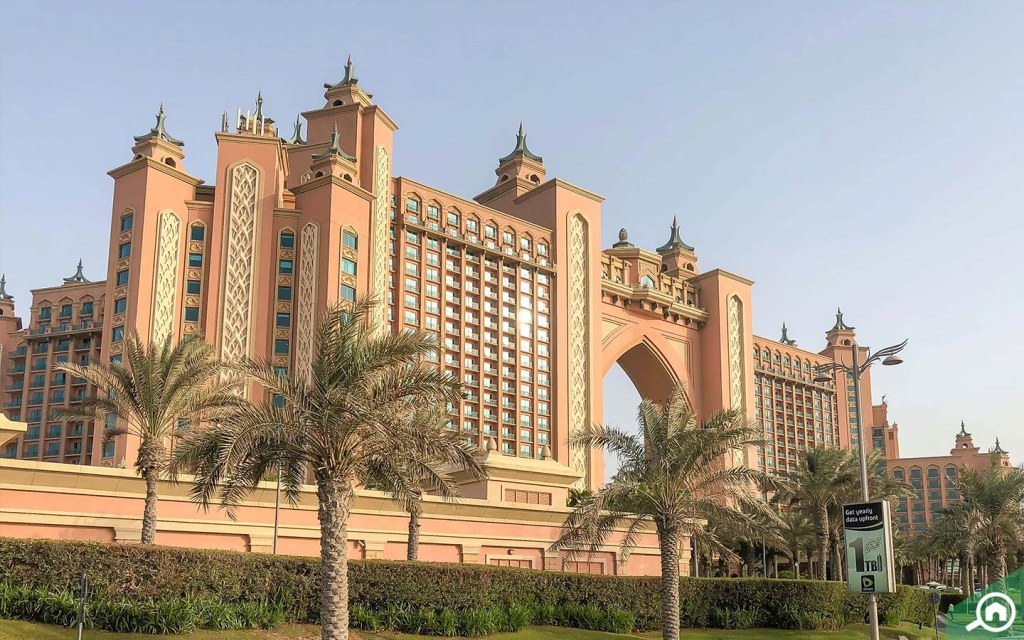
- The island’s frond villas offer private beaches, while the crescent hosts showpiece resorts—most famously Atlantis The Palm—featuring aquariums, waterparks, celebrity-chef restaurants and award-winning spas.
LESSER KNOWN PALM JUMEIRAH FACTS
- Palm Jumeirah is part of a trio of palm-shaped concepts: Palm Jumeirah, Palm Jebel Ali and the reimagined Deira master plan now known as Dubai Islands. Together, they represent an evolving vision for Dubai’s shoreline.
- Palm Jebel Ali is larger in total footprint than Palm Jumeirah, with a different arrangement of fronds and lagoons—illustrating how each palm design adapts to its location and intended use.
- Two key connections link the Palm internally: a surface bridge to the trunk from mainland Dubai and a six-lane underwater tunnel joining the trunk to the crescent, easing resort and event traffic.
- For water quality, the crescent includes carefully engineered openings that promote tidal exchange, keeping lagoons refreshed and supporting marine life along rock revetments.
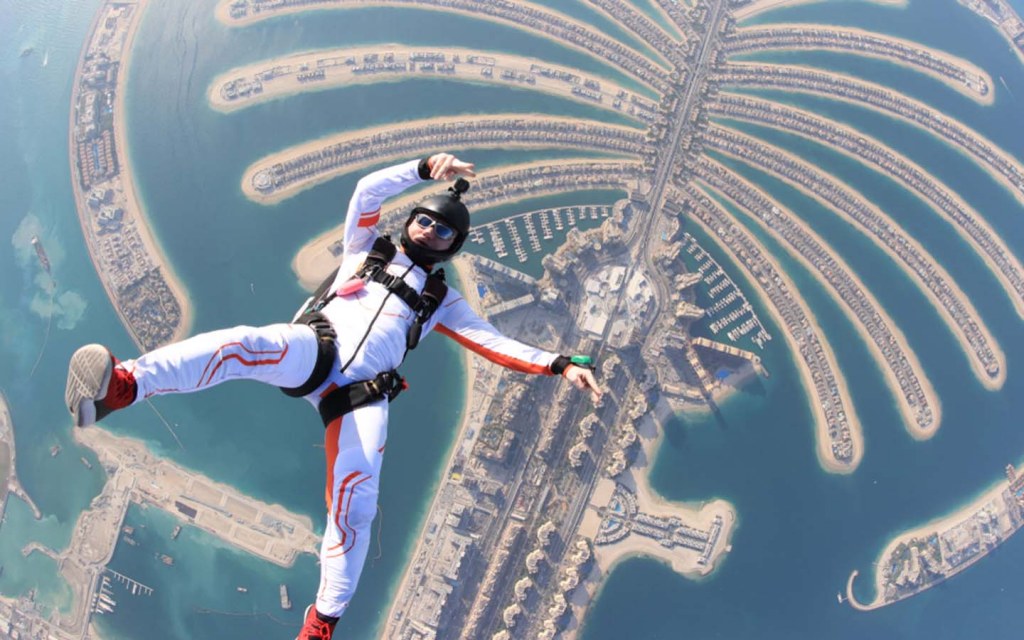
- Skydiving over Palm Jumeirah is among Dubai’s most photographed adventures. Tandem jumps typically occur from around 13,000 feet, offering spectacular bird’s-eye views of the palm, crescent and city skyline.
- Helicopter sightseeing flights and boat cruises trace the palm outline, revealing how the fronds multiply waterfront edges and create unique seaside perspectives.
FAQs
What is Palm Jumeirah, in simple terms?
Palm Jumeirah is a palm-shaped artificial archipelago built off Dubai’s coast using sand and rock. It includes a central trunk, 16 residential fronds and a crescent-shaped breakwater lined with flagship resorts.
When was Palm Jumeirah built?
Land reclamation began in 2001, with major infrastructure achieved by the mid-2000s and the first residents moving in around 2007. Hotel openings quickly followed, transforming the island into a world-class destination.
How much did Palm Jumeirah cost to build?
The core development cost is widely cited at about $12 billion, excluding private properties and resort construction. Signature hotels alone represent multi-billion-dollar investments on the crescent.
How is the island protected from waves and storms?
An 11 km crescent-shaped breakwater, made of layered geotextiles and rock armoring, shields the island while allowing water exchange through engineered openings to maintain good circulation.
How do you get to and around Palm Jumeirah?
Road bridges connect the trunk to mainland Dubai, and an underwater tunnel links the trunk to the crescent. The Palm Monorail provides convenient access to major attractions, with stations from the base of the trunk out to the crescent.
Can foreigners buy property on Palm Jumeirah?
Yes—Palm Jumeirah includes freehold zones where non-UAE nationals can purchase property, subject to local regulations and standard conveyancing procedures.
Is Palm Jumeirah sinking?
The island was engineered with vibro-compaction and ongoing geotechnical monitoring. While all reclaimed land settles to some degree, the island’s design and maintenance focus on long-term stability and serviceability.