
 English
 العربية
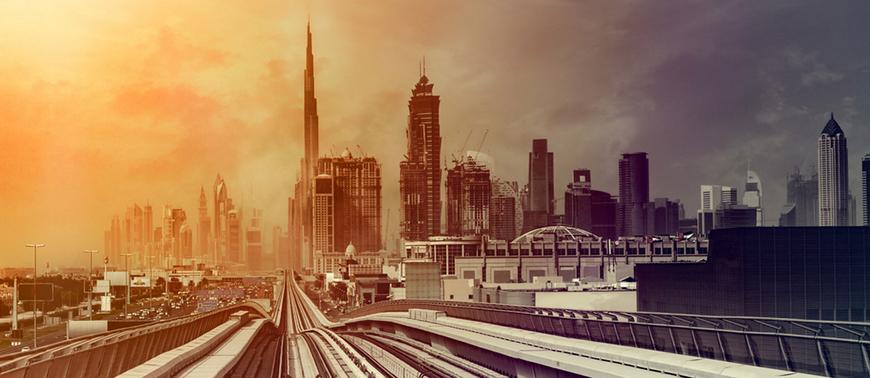
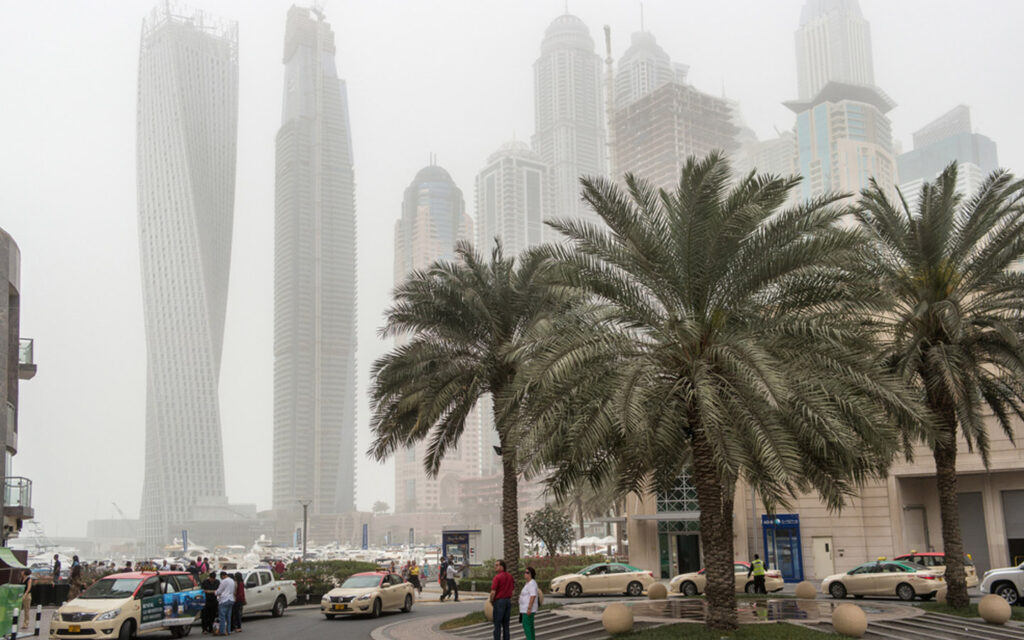
Dubai sandstorms, often called haboobs, are fast-moving walls of sand and dust produced by strong desert winds. In a matter of minutes, they can turn a bright skyline into an orange or rust-hued haze, bringing low visibility and spiking particulate pollution. This guide explains what drives these events, when they are most likely, how they affect health and daily life, and the safety measures that work.
Dubai sandstorms explained
At their core, sandstorms occur when gusty winds shear across dry ground and loft loose grains of sand and dust. Sand grains, which are heavier, tend to stay close to the surface, while finer dust can be carried much higher and farther. In severe cases, visibility can fall below one kilometre and air quality can quickly shift to unhealthy or hazardous levels.
Dubai residents frequently distinguish between light dust or haze and genuine sandstorms. Haze is a diffuse reduction in clarity without obvious blowing particles. By contrast, a sandstorm feels gritty, looks visibly turbulent, and often arrives as a defined wall of dust. Meteorologists track these events by monitoring wind, visibility, and particulate concentrations like PM10 and PM2.5.
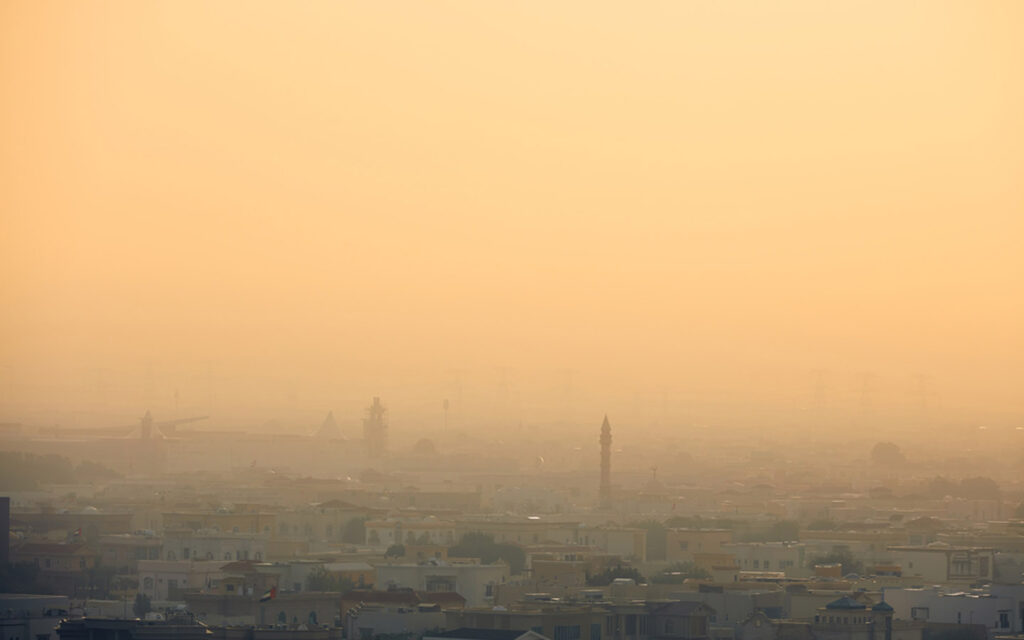
In and around the UAE, sand and dust are sourced from arid landscapes with sparse vegetation. Prolonged dryness, intense summer heating, and disturbed ground surfaces make it easier for winds to lift particles. That is why sandstorms in Dubai feel more sudden and intense than typical dusty days: the winds involved are stronger, the atmosphere is more unstable, and the quantity of lofted material is far greater.
What causes Dubai sandstorms
Most Dubai sandstorms are linked to shamal winds, the region’s well-known north to northwest flow. These winds are steered by pressure differences across the Arabian Peninsula and can sweep across southern Iraq, Kuwait, northern Saudi Arabia, and the Syrian Desert before reaching the UAE, gathering sand and dust en route.
- Regional pressure patterns: Strong high pressure over the eastern Mediterranean or Iraq contrasted with lower pressure over the Gulf can accelerate shamal winds toward the UAE.
- Outflow boundaries and thunderstorms: In the hot months, collapsing thunderstorms in nearby regions generate powerful outflow gust fronts. These spread rapidly and can form classic haboob walls of dust.
- Surface conditions: Dry, loose soils and minimal vegetation allow easier entrainment of particles. Construction sites, off-road tracks, and land clearing expose additional sediment.
- Heat and turbulence: Extreme ground heating produces mixing and turbulence that keep particles suspended, sometimes long after peak winds ease.
- Low rainfall: With scant precipitation for much of the year, soils do not bind, leaving sand available for transport.
Human activity can exacerbate the hazard. Overgrazing, removal of native plants, and poorly managed land disturbance contribute to desertification, creating larger fetch areas for winds to mobilize sand. On the flip side, targeted windbreaks, soil stabilization, and revegetation are known to reduce dust emissions.
How sandstorms affect health, daily life, and infrastructure
Health is the most immediate concern. Fine particles irritate the eyes, nose, throat, and skin, and can worsen asthma, bronchitis, and other respiratory or cardiovascular conditions. People may notice coughing, wheezing, chest tightness, headaches, or fatigue, and symptoms can linger even after skies appear clearer because residual dust remains suspended.
- Who is most at risk: children, older adults, pregnant people, outdoor workers, and anyone with asthma, COPD, allergies, or heart disease.
- Common symptoms: irritated eyes and throat, runny nose, dry cough, shortness of breath, and heightened allergy responses.
- Indoor air effects: Dust infiltrates buildings through small gaps; AC systems can recirculate particles without adequate filtration.
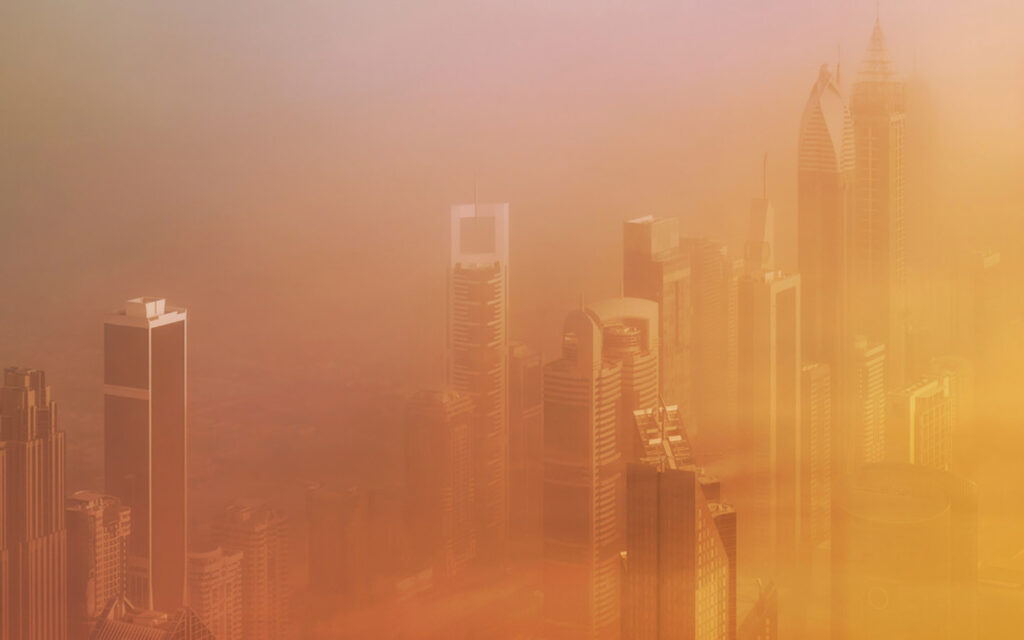
Beyond health, sandstorms strain infrastructure and daily routines. Dust accumulation reduces solar panel output, grit can corrode exterior surfaces, and sensitive mechanical systems require extra maintenance. Visibility drops lead to slower road traffic and increased collision risk. Ports and marine operations may pause, and flight schedules often face delays, diversions, or cancellations when crosswinds and runway visibility fall below safety thresholds.
- Transport: Reduced visibility on major arteries, periodic speed restrictions, and temporary suspensions to certain services until conditions improve.
- Utilities and equipment: Dust infiltration, corrosion, and clogged filters increase maintenance frequency for HVAC, generators, and electronics.
- Business impacts: Outdoor construction and events pause; indoor venues may see reduced footfall as residents wait out the storm.
Environmental effects include reduced sunlight reaching coastal waters for a short time and the deposition of nutrient-rich dust on land, which can subtly affect soil chemistry. While dust deposition can benefit some ecosystems, repeated events combined with heat stress challenge urban trees and landscaping.
Sandstorm season in Dubai
Dubai’s peak sandstorm season aligns with the hottest months, typically June through September. Stronger shamals and intense surface heating promote vigorous mixing, while any thunderstorm outflows in the wider region can rapidly generate haboobs. Transitional months such as March to May and September to November also see elevated activity as shifting pressure patterns, sea-breeze interactions, and regional troughs pass through.
Fewer storms tend to occur from December to February, when cooler temperatures and occasional rainfall help bind surface dust. That said, brief dusty spells can still happen if a robust pressure gradient develops and taps into upwind source regions. Year to year, frequency varies with broader climate patterns and the state of upwind deserts.
Preventive measures for sandstorm weather in the UAE
Preparation pays off. A few simple steps can dramatically reduce your exposure and keep homes and vehicles protected when a sandstorm hits.
At home
- Seal the envelope: Keep windows and doors shut; use damp towels or weatherstripping to block gaps around sills and under doors.
- AC settings: Switch to recirculation mode; clean or replace filters promptly after dusty days. A HEPA purifier can further improve indoor air.
- Safe rooms: If possible, designate a room with the best sealing and run air purification there during the peak of the storm.
- Housekeeping: Dust with microfiber cloths and wet mops rather than dry sweeping to avoid resuspending particles.
Personal protection
- Masks: A well-fitting N95 or similar respirator reduces inhalation of fine particles; cloth or surgical masks offer limited protection.
- Eye safety: Wraparound sunglasses or goggles prevent irritation from blowing grit.
- Clothing: Long sleeves and light scarves protect skin; moisturize after exposure to reduce dryness.
On the road
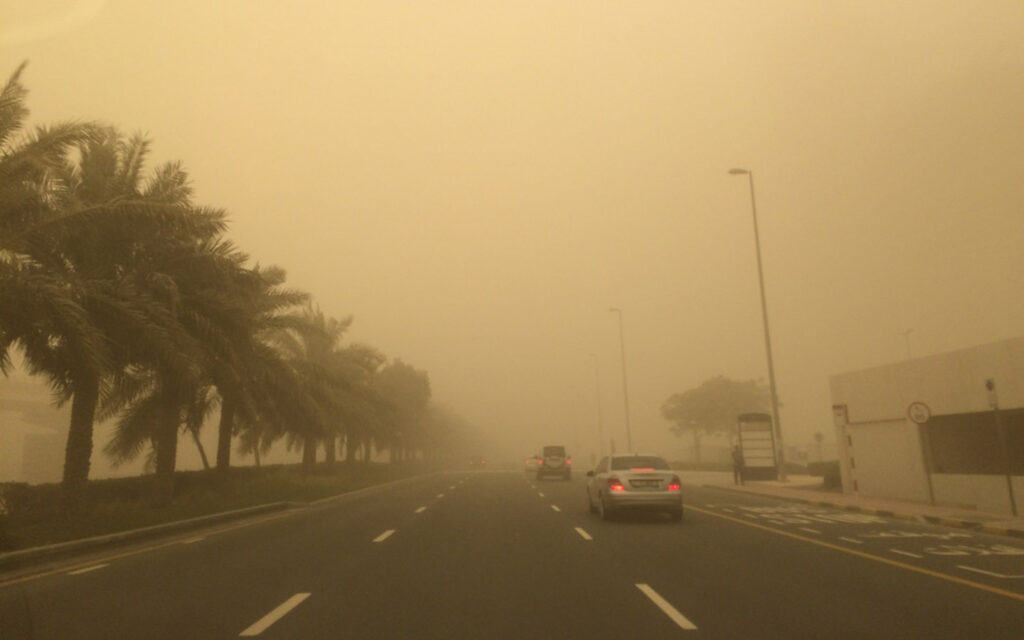
- Avoid nonessential trips during peak dust. If you must drive, slow down, increase following distance, and use headlights.
- If visibility collapses, pull well off the roadway, turn on hazard lights, and wait until conditions improve.
- Keep the cabin on recirculation; replace cabin air filters more frequently in sandstorm season.
Emergency readiness
- Go-kit: Stock water, basic medications, a flashlight, spare batteries, and a power bank. Consider a small first-aid kit and saline eye wash.
- Alerts: Follow official guidance and weather updates from the National Center of Meteorology and local authorities.
- After the storm: Ventilate once outdoor conditions normalize, then clean AC filters and indoor surfaces. Check cars for clogged air intakes.
- Pets: Bring animals indoors or into sheltered, well-ventilated areas with clean water available.
Famous Dubai sandstorms
While dusty days are common across the region, a handful of high-impact sandstorms stand out for their visibility drops and citywide disruption.
- 2008: A weekend sandstorm sharply reduced visibility across Dubai, challenging motorists and prompting widespread caution on major roads.
- 2012: Several late-spring events brought alternating dust and scattered showers, creating slippery roads and sudden visibility changes.
- 2015: A large regional dust outbreak affected parts of the UAE, complicating air travel and causing difficult driving conditions.
- 2019: Intense heat followed by pressure shifts set the stage for simultaneous dust and thunderstorms in parts of the country.
- 2022: A strong episode driven by shamal winds blanketed the city in thick dust, with notable travel delays and striking skyline visuals.
- 2023: Multiple incursions of regional dust periodically pushed air quality into unhealthy ranges, impacting outdoor work and transport.
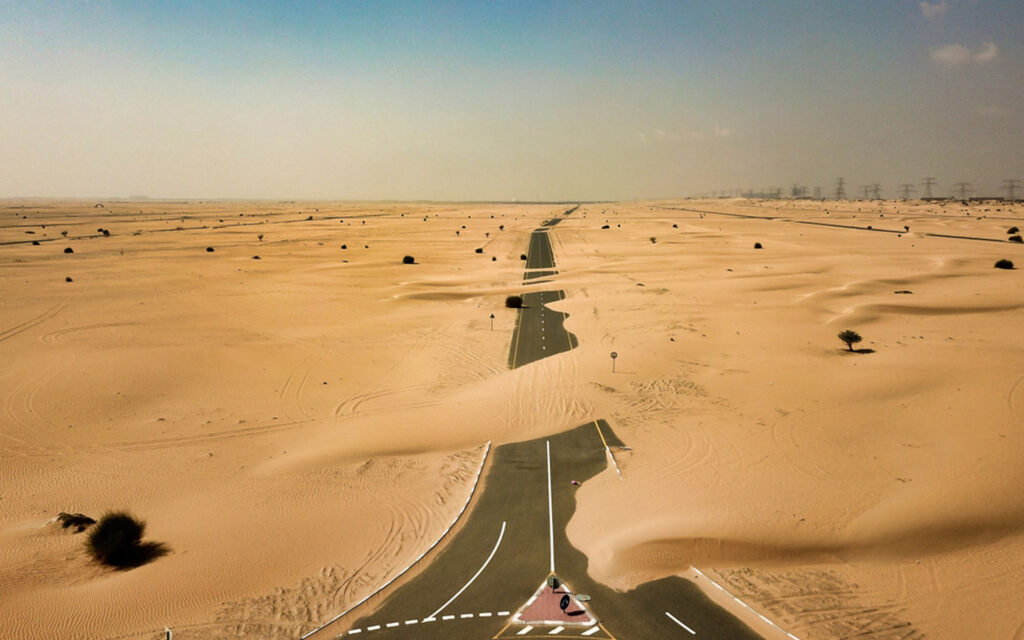
Recent years highlight how quickly conditions can change in the warm season. Even when the sky looks clear, a distant gust front can reach the city in less than an hour, so timely alerts and prepared routines make a real difference.
FAQs
What exactly is a haboob and how is it different from a typical dusty day?
A haboob is a fast-moving wall of dust created by strong winds, often from thunderstorm outflows or intense shamal gusts. It is more abrupt and concentrated than a general dusty day, with a defined leading edge, rapid visibility loss, and stronger gusts near the surface.
Are Dubai sandstorms predictable?
Short-term forecasts flag higher-risk days when winds and pressure patterns align, and official alerts are issued as needed. However, individual haboobs can still develop quickly, especially when triggered by distant thunderstorm outflows, so conditions may deteriorate faster than expected.
How can I tell a sandstorm from a dust storm?
Sandstorms carry larger grains that remain close to the ground, producing a low, dense wall and gritty feel. Dust storms involve finer particles lofted higher into the atmosphere, spreading farther and sometimes lasting longer. In practice, both often occur together, with sand near the surface and dust aloft.
What mask should I wear during a sandstorm?
A well-fitted N95 or equivalent respirator offers effective filtration of fine particles. Ensure a snug seal around the nose and cheeks. For eye comfort, add wraparound sunglasses or goggles to block blowing grit.
Is it safe to drive when a sandstorm hits?
If visibility is deteriorating, delay travel. If you are already on the road, slow down, switch on headlights, and increase following distance. If visibility becomes extremely low, pull well off the roadway, keep hazard lights on, and wait for improvement rather than continuing at speed.
How do sandstorms affect flights and city services?
Airports may delay or reroute flights during low-visibility windows, and certain outdoor services pause until conditions improve. Road speeds can be reduced, and some marine or construction activities may be temporarily suspended for safety.
How can I protect my home and AC system?
Close windows and doors, use draft stoppers or damp towels to block gaps, and set AC to recirculation mode. Replace or clean filters after dusty periods and consider a HEPA air purifier for the most-used room. Wet-clean surfaces to avoid resuspending dust.
If an emergency arises during severe weather, follow guidance from local authorities and use official emergency numbers for immediate assistance.